


Client’s request
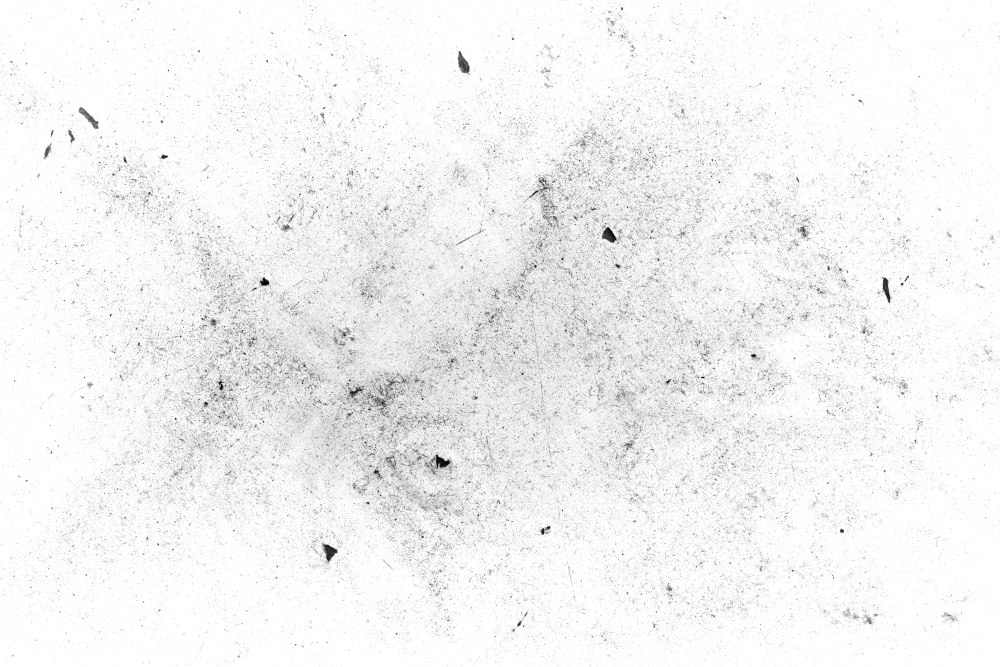
The client reports the presence of contamination by black powdery material inside a silicone tube. The objective of the investigation is to determine the chemical contamination and then identify the cause of the defect.
The solution proposed by Plastanalysis
The Plastanalisi laboratory decides to proceed with the analysis of the powder by means of the scanning electron microscopy (SEM-EDS) technique. SEM-EDS is a powerful means of investigation for chemically heterogeneous solids on a microscopic scale and on coatings.
In the scanning electron microscope (SEM) a very thin beam of electrons with energy of up to 30 keV is focused on the surface of the sample inside the microscope and scans in the form of a succession of parallel lines. Some phenomena occur on the surface subjected to the impact of the electrons; the most important for electron microscopy are:
- the emission of secondary electrons
- the re-emission or reflection of high-energy or backscattered electrons belonging to the primary beam.
The configuration and arrangement of the detectors for the two types of emitted electrons are such that the peculiarities of the emission mechanism are best exploited. In particular, the secondary electrons are used for the construction of magnified images of up to 200,000x and resolved up to 5nm.
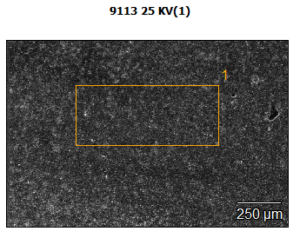
The microanalysis using the scanning electron microscope (SEM) is carried out by measuring the energy and distribution of the intensities of the X-rays generated by the electron beam on the sample using an EDS energy-dispersive detector (energy-dispersive spectrometry, EDS).
Analysis results
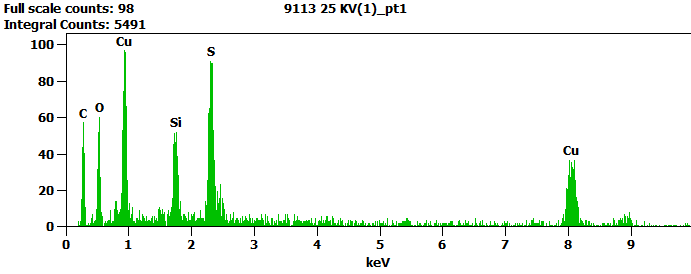
The SEM-EDS elemental microanalysis of the black contaminating material shows the presence of copper and sulfur along with silicon, oxygen and carbon. The copper and sulfur indicate the presence of copper sulfides: Cu/S atomic ratio is about 1 and is indicative of copper(II) sulfide (CuS – black). The silicon is attributable to silicone residues from the tube, while the carbon and oxygen are partly referable to silicone residues and partly to other organic material. The black powder is then identified and characterized as copper(II) sulfide (CuS) a black compound.